Makkah – Corporate Communication
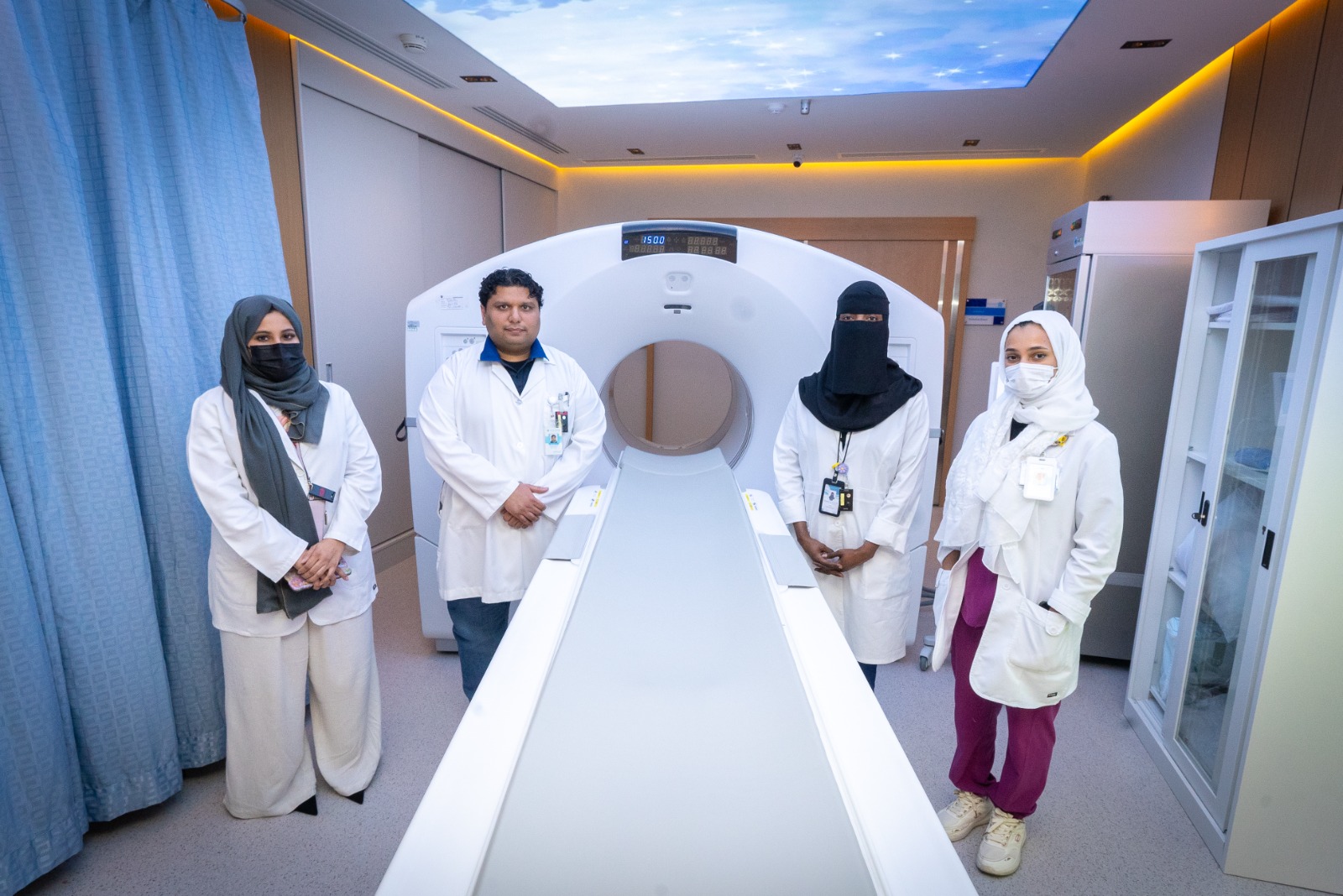
In a qualitative step reflecting the advancement of accurate diagnosis, King Abdullah Medical City – a member of the Makkah Health Cluster – has successfully performed, for the first time, 65 advanced diagnostic examinations using FDG PET/CT for patients with cancer and refractory epilepsy. This has contributed to improving diagnostic accuracy and determining optimal treatment pathways in line with internationally recommended treatment timelines.
The medical city explained that the initial operation of PET imaging services began in early December, during which 45 specialized scans were conducted within the same month. These included advanced oncology cases and refractory epilepsy cases, aiming to determine the most appropriate treatment option for each patient—whether chemotherapy, radiotherapy, or surgical intervention—within an integrated diagnostic approach that places patient safety and quality of care at the forefront.
In this context, Dr. Aqib Mohammed Bakhsh, Consultant in Nuclear Medicine and Molecular Imaging and Director of Diagnostic and Interventional Radiology at King Abdullah Medical City, stated:
“PET imaging represents one of the most important tools in modern medicine for diagnosing cancer and refractory epilepsy, as it enables precise assessment of cellular metabolic activity. This supports making the right therapeutic decision at the right time, whether during initial diagnosis, treatment response evaluation, or early detection of recurrence—God forbid.”
He added that the medical city has continued to expand the provision of this service in the current year, with 15 additional scans performed during the first week of 2026, alongside approximately 20 scheduled appointments, reflecting the importance of PET imaging as a core component of the patient’s integrated care journey within the medical city—whether for timely treatment planning or post-therapy follow-up.
King Abdullah Medical City affirmed that the operation of the PET scanner came after meeting all approved technical, regulatory, and compliance requirements locally and internationally, and after obtaining official practice licensing from the Nuclear and Radiological Regulatory Commission, in accordance with the highest standards in nuclear medicine and molecular imaging.
The city further noted that operations are conducted under the supervision and follow-up of the Radiation Protection Department, ensuring strict adherence to radiation safety standards and the protection of both patients and healthcare workers.
This reflects the application of global best practices and underscores the city’s commitment to promoting a strong culture of radiation safety and ensuring safe, sustainable operation of advanced medical technologies.
The launch of PET imaging services aligns with King Abdullah Medical City’s strategy to localize advanced medical technologies, enhance diagnostic accuracy, and improve the efficiency of specialized care, in line with the objectives of the Saudi Healthcare Model and national health sector transformation programs. This contributes to improving patient experience and reducing the need for patients to travel outside the region to access advanced diagnostic services.
It is noteworthy that PET imaging services are the first of their kind within Ministry of Health hospitals in the region, representing a strategic addition to the advanced service portfolio of King Abdullah Medical City and reinforcing its position as a leading tertiary referral center in the diagnosis and treatment of complex diseases